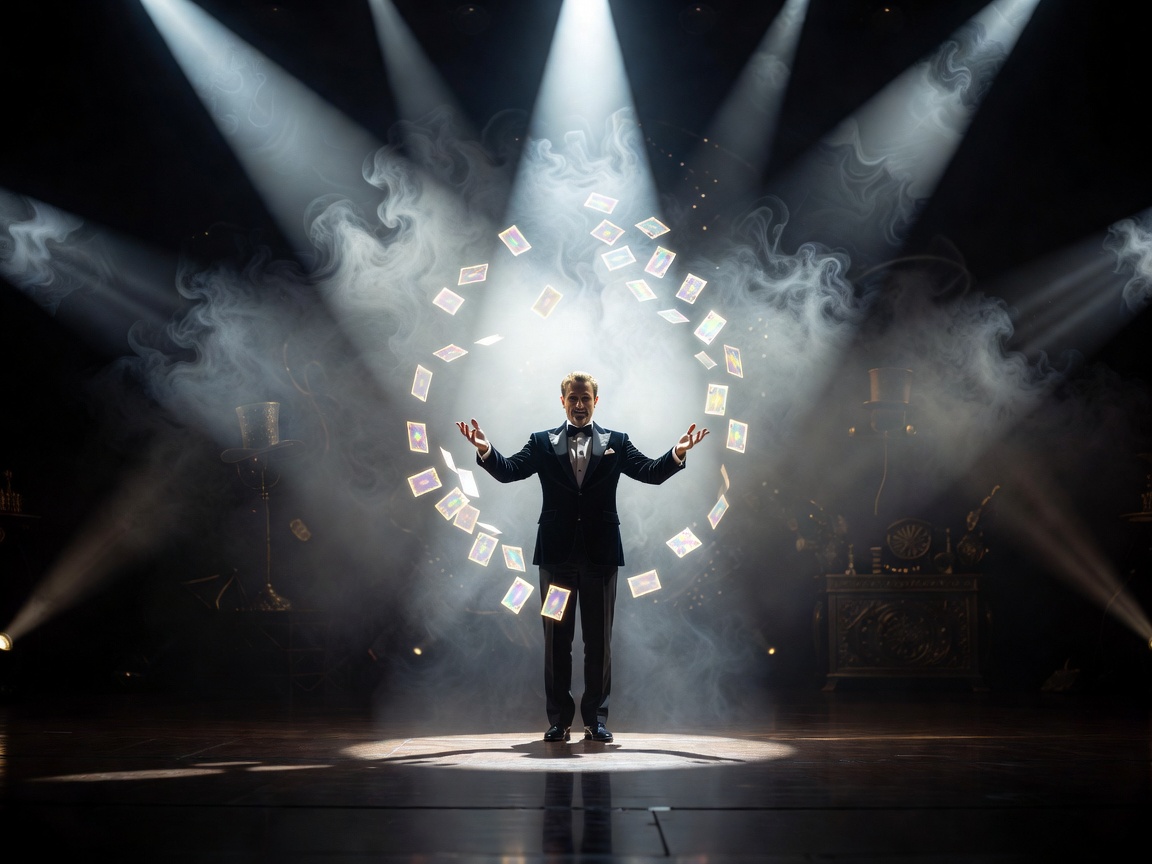
When the lay public imagines a magician, they frequently picture a figure standing on a grand stage, bisecting an assistant or causing heavy objects to float ethereally through the air. This discipline, known as "Grand Illusion," represents the intersection of mechanical engineering, optical science, and grand theatricality. It operates on vastly different principles than sleight of hand.
The Core Categories of Illusion
Since the golden age of magic in the late 19th and early 20th centuries, stage illusions have traditionally been categorized by their visual effect. No matter how advanced the technology gets, almost all illusions fall into one of these archetypes:
- Productions and Vanishes: Making a person, animal, or large object appear or disappear. From the classic appearance from an empty cabinet to vanishing an entire vehicle, these rely heavily on trapdoors, mirrors, and specialized lighting.
- Levitations and Suspensions: Defying gravity. Suspensions require the subject to have a visible point of contact (like a broom), while levitations feature no visible support at all. The mechanics often involve hidden cantilevers and counterweights.
- Penetrations: Passing solid matter through solid matter. The famous "Walking Through a Brick Wall" or swords pierced through a basket are standard examples.
- Restorations: The "Sawing a Woman in Half" falls here. The object or person is destroyed, separated, and then restored to pristine condition.
- Transpositions: The magician and the assistant instantly trade places across the stage, often masked by a momentary curtain or flash of light.
The Role of Theatrical Framing
Unlike close-up magic, where a mistake might be covered by a quick improvised joke, a stage illusion is a rigid mechanical process. A box must lock into a specific groove; a mirror must drop at a precise angle. Therefore, the "magic" must be generated by the theatrical framing rather than purely the mechanism itself.
Lighting and Set Design
Many classic illusions rely on a concept known as "Black Art." By contrasting blindingly bright stage lights against an absolutely matte black background, physical structures can be rendered entirely invisible to the audience. Proper lighting design isn't just aesthetic in a grand illusion show; it is the fundamental secret to the trick. Shadows hide the depth of boxes, while follow-spots force the audience to look away from the load-in zones.
Music and Choreography
A stage illusion relies on pace. Music dictates the emotional rhythm of the routine, building tension right up to the reveal. The assistants on stage are not merely decoration; they are highly trained dancers and acrobats who execute vital mechanical tasks under the guise of choreography. A graceful flourish of an assistant's arm might secretly latch a hidden panel.
Historical Pioneers
The lineage of grand illusion traces back to innovators who were essentially stage engineers. John Nevil Maskelyne and David Devant held court at the Egyptian Hall in London, creating illusions that relied on complex clockwork and optics. Later, Howard Thurston and Harry Blackstone Sr. took these concepts on tour, requiring entire railcars to transport their massive shows.
In the modern era, illusion design incorporates aerospace materials, carbon fiber, and computerized winches to create effects that the pioneers could only dream of, yet the psychological principles of directing the audience's assumptions remain entirely unchanged.
The Logistics of Modern Illusion
Producing a grand illusion show today is akin to running a Broadway production. The props themselves cost tens or hundreds of thousands of dollars, custom-built by specialized illusion builders who sign strict non-disclosure agreements. The physical toll on the performers is high; assistants must contort into incredibly tight, unventilated spaces in seconds, all while maintaining a calm, smiling facade. It is a grueling, magnificent art form that transforms cold steel and canvas into pure wonder.